
插件
一个插件是一个包——或者一个单独的 .py 文件——它携带一份静态 manifest,列出它向 Noeta 贡献了什么。加载一个插件就是读取这些 manifest;它不运行任何插件代码。随后某个 agent 再去激活它想要的插件。这两步拆分就是全部要点:宿主决定什么是可用的,agent 决定它用什么。
Noeta 自己的能力也是这样发布的。10 个默认工具、默认的那组 guard、三条 compose 时的 reminder,全都是内置插件,经由与你所写之物完全相同的 loader 解析。(provider 适配器同样随 SDK 发布,但 host 直接从 noeta.sdk.providers 构造它们——providers 内置插件不向任何 surface 贡献内容。)
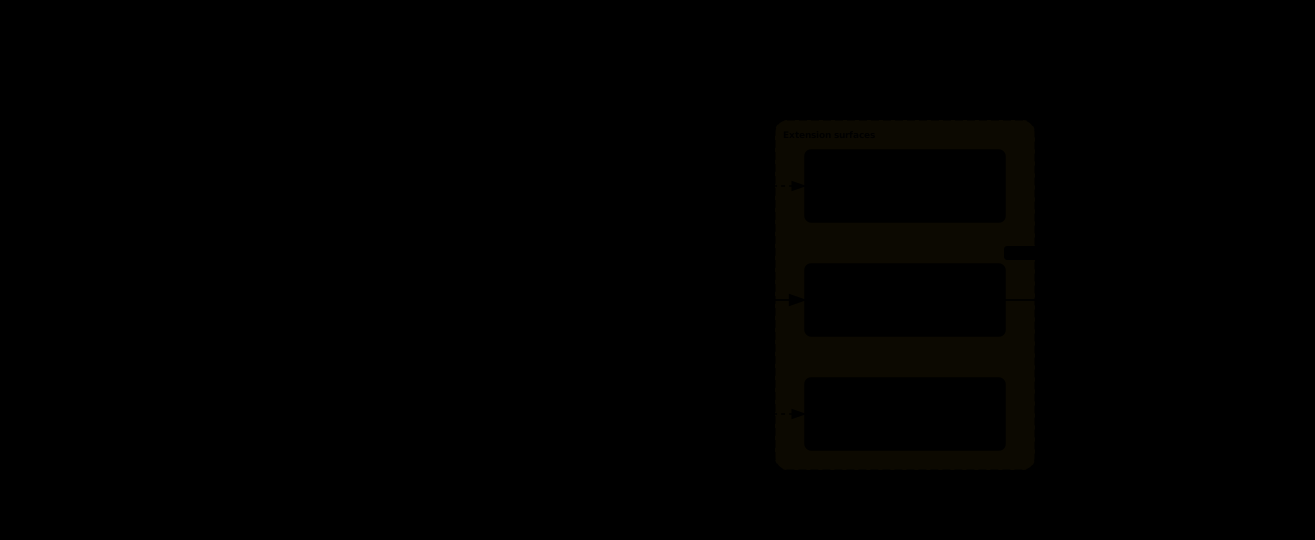
三个平面
每一个贡献都落在十六个 Surface 之一上,而每个 Surface 又坐落在三个平面之一上。平面决定这个贡献在哪里生效。
| 平面 | Surface | 效果 |
|---|---|---|
| identity | tool、agent、content_kind、prompt_fragment、policy、control_tool | 进入被记录的 AgentSpec;跟随按 agent 的激活 |
| wiring | guard、observer、provider、reminder_provider、reminder、tool_result_transform、session_pack | 是行为,不是身份。guard 和 observer 一经加载即进程级生效——治理属于运维方的权限,不是 agent 作者可以选择开启的东西 |
| host | mcp_server、skills、sandbox_provider | 由宿主挑选并绑定;从不按 agent |
每个 Surface 的完整契约以及一个可照做的示例:插件 Surface。
一个最小的插件
两个文件。manifest 声明贡献;模块放代码。
# pyproject.toml
[tool.noeta]
name = "house-style"
requires-noeta = ">=0.4"

[[tool.noeta.contributions]]
surface = "prompt_fragment"
name    = "house-style"
text    = "Answer in at most three sentences."

[[tool.noeta.contributions]]
surface = "tool"
ref     = "house_style.tools:LintTool"    # module:attr import string
加载它,然后在某个 agent 上激活它:
from noeta.sdk import Client, DEFAULT_PLUGINS, Options, load_plugins

pset = load_plugins(entry_points=True)      # built-ins + installed plugins
print(pset.names())
# → ('app', 'ask_user_question', …, 'house-style', …)

options = Options(
    system_prompt="You are a coding agent.",
    plugins=DEFAULT_PLUGINS + ("house-style",),
)
client = Client(options, provider=my_provider, workspace_dir=".", plugins=pset)
manifest 的形状、loader 的五个来源、信任门与版本约束:插件 manifest。
先加载,再激活
| 步骤 | 在哪里 | 它决定什么 |
|---|---|---|
| 加载 | load_plugins(...) -> PluginSet,宿主层 | 这个进程里有哪些插件 代码可用 |
| 激活 | Options.plugins / AgentDefinition.plugins,agent 层 | 这个 agent 用哪些已加载的插件 |
Client(options, plugins=<PluginSet>) 把两者绑在一起。一个不在加载集里的激活名会让构建失败——大声地、在启动时,绝不在某一轮的中途。激活会进入 AgentSpec 身份,因此一个多了某个插件的 agent,在记录里就是另一个 agent。完整的激活词汇见 Options。
一个 PluginSet 是在不执行任何插件代码的前提下可列举、可查冲突的:.contributions() 和 .merged() 只读静态 manifest,而 .resolve() 是唯一的 import 边界,在 client 构建时调用一次。
for plugin_name, contribution in pset.contributions("tool"):
    print(plugin_name, contribution.name)   # no plugin body imported
# → fs read
# → fs glob
# → …
接下来去哪儿
| 页面 | 涵盖 |
|---|---|
| 插件 manifest | [tool.noeta] 各个表、PluginBuilder、load_plugins、信任存储、requires-noeta、打包 |
| 插件 Surface | 全部十六个 Surface,每个一节,附上演示它的那个内置插件 |
| 编写插件 | 面向任务的指南 |
| 扩展平面 | 这些平面为什么画在现在的位置 |